

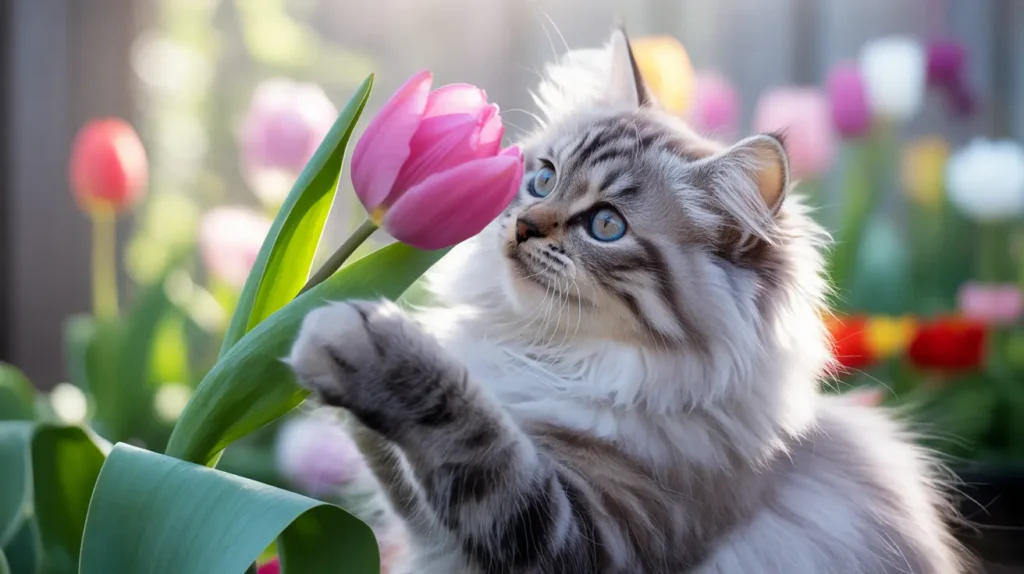
Tulips are one of the most popular spring flowers, admired for their bright colors and elegant shape. They brighten homes and gardens, especially during warmer months. However, many cat owners don’t realize that tulips toxic to cats is not just a myth — it’s a real and serious concern.
If you share your home with a curious feline, understanding the risks associated with tulips can help prevent accidental poisoning and protect your pet’s health.
Are Tulips Really Dangerous for Cats?
Yes, tulips are considered toxic to cats. They belong to the Liliaceae family and contain harmful compounds known as tulipalin A and tulipalin B. These substances can cause irritation and poisoning when ingested.
The most toxic part of the plant is the bulb, but the leaves, stems, and flowers also contain smaller amounts of these compounds.
Cats may chew on plants out of curiosity, boredom, or digestive instinct. Even small amounts can trigger symptoms.
Why Are Cats Attracted to Tulips?
Cats are naturally inquisitive. They may investigate tulips because:
- The leaves move and resemble grass
- The bright petals catch their attention
- They enjoy chewing on greenery
- The plant is placed within easy reach indoors
Indoor cats are particularly prone to exploring houseplants since they have limited environmental stimulation.
Symptoms of Tulip Poisoning in Cats
If a cat chews or ingests any part of a tulip, symptoms can appear quickly. The severity depends on how much was consumed and which part of the plant was eaten.
Common signs include:
- Drooling
- Vomiting
- Diarrhea
- Loss of appetite
- Lethargy
- Irritation around the mouth
- Increased heart rate (in severe cases)
If a large amount of the bulb is ingested, more serious complications may occur.
When to Seek Veterinary Help
You should contact your veterinarian immediately if:
- You witness your cat chewing on a tulip
- Your cat shows sudden digestive upset
- There is unexplained drooling or weakness
- Symptoms worsen within a few hours
Early intervention can prevent complications and speed up recovery.
How Vets Treat Tulip Poisoning
Treatment depends on the amount ingested and how quickly medical care is provided.
A veterinarian may:
- Induce vomiting (if ingestion was recent)
- Administer activated charcoal to absorb toxins
- Provide IV fluids for hydration
- Monitor heart rate and vital signs
- Offer supportive medications to ease symptoms
Most cats recover fully with prompt treatment, especially if only a small amount was consumed.
Preventing Exposure at Home
The safest approach is prevention. If you own cats, it’s best to avoid keeping tulips indoors or planting them in accessible garden areas.
Practical safety tips include:
- Keeping flowers out of reach
- Avoiding decorative bulb displays
- Supervising cats around new plants
- Choosing pet-safe alternatives
- Informing family members about toxic plants
Even fallen petals or leaves on the floor can pose a risk.
Safe Flower Alternatives for Cat Owners
If you love decorating with fresh flowers, there are safer options available.
Pet-friendly alternatives include:
- Roses
- Sunflowers
- Orchids
- Snapdragons
- Gerbera daisies
Always double-check plant safety before bringing new greenery into your home.
Outdoor Risks to Consider
If your cat has outdoor access, tulips planted in gardens can still pose a threat. Bulbs buried in soil may attract digging behavior, especially in playful or curious cats.
To reduce outdoor risk:
- Fence off flower beds
- Use raised planters
- Supervise outdoor time
- Remove fallen plant debris
Awareness is key to preventing accidental exposure.
Other Spring Plants That Are Toxic
Tulips are not the only seasonal hazard. Other common spring flowers that can be harmful include:
- Lilies (extremely toxic)
- Daffodils
- Hyacinths
- Crocuses
- Azaleas
Learning which plants are unsafe helps create a cat-friendly environment year-round.
Final Thoughts
Tulips may symbolize beauty and renewal, but they can pose hidden dangers to curious cats. The idea that tulips toxic to cats is a serious matter should not be overlooked, especially during spring when these flowers are everywhere.
The good news is that poisoning is preventable. By keeping harmful plants out of reach and acting quickly if exposure occurs, you can safeguard your feline companion.
If you ever suspect your cat has ingested part of a tulip, don’t wait for symptoms to worsen. Contact your veterinarian immediately. With awareness and proactive care, you can enjoy a beautiful home and a healthy, happy cat at the same time.