


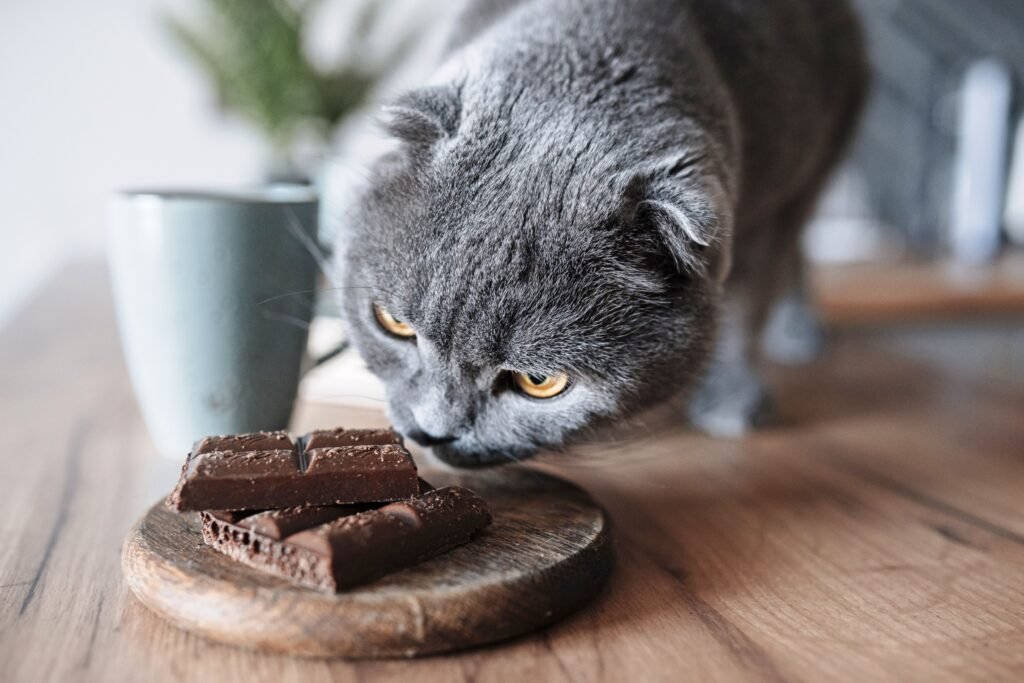
Chocolate may be a favorite treat for humans, but when it comes to our feline friends, it’s a completely different story. Many pet owners wonder, can cats eat chocolate safely? The simple and important answer is no.
Even small amounts can pose health risks. While cats are less likely than dogs to eat chocolate because they don’t typically crave sweets, accidental exposure can still happen. Understanding the dangers can help you act quickly and protect your pet.
Why Is Chocolate Dangerous for Cats?
Chocolate contains two substances that are toxic to cats:
- Theobromine
- Caffeine
Both are stimulants that affect the central nervous system and heart. Cats process these chemicals much more slowly than humans, allowing toxins to build up in their system.
The darker and more concentrated the chocolate, the more dangerous it becomes.
Types of Chocolate and Risk Levels
- Dark chocolate – Very high risk
- Baking chocolate – Extremely toxic
- Milk chocolate – Still dangerous
- White chocolate – Lower theobromine content but not safe
Even if symptoms don’t appear immediately, internal damage may still occur.
Why Cats Rarely Seek Chocolate (But Still Get Sick)
Unlike dogs, cats lack taste receptors for sweetness. This makes them less likely to intentionally eat chocolate. However, they may still consume it if:
- It’s mixed with milk or fat
- It’s baked into foods
- It’s left within reach
- They accidentally lick chocolate residue
Curious kittens are especially at risk.
Symptoms of Chocolate Toxicity in Cats
If a cat ingests chocolate, symptoms can appear within a few hours. The severity depends on the amount and type consumed.
Watch for:
- Vomiting
- Diarrhea
- Increased heart rate
- Restlessness or hyperactivity
- Muscle tremors
- Rapid breathing
- Seizures
- Elevated body temperature
In severe cases, chocolate poisoning can become life-threatening.
How Much Chocolate Is Dangerous?
There is no truly safe amount. Even small quantities of dark or baking chocolate can cause serious symptoms in cats due to their smaller size and slower metabolism.
Factors that influence toxicity include:
- Your cat’s weight
- The type of chocolate
- The amount consumed
- Overall health condition
When in doubt, always treat chocolate ingestion as an emergency.
What To Do If Your Cat Eats Chocolate
If you suspect your cat has eaten chocolate, act quickly.
Immediate Steps:
- Remove access to any remaining chocolate
- Check how much was eaten and what type
- Call your veterinarian immediately
- Contact a pet poison hotline if your vet is unavailable
Do not attempt home remedies unless instructed by a professional. Inducing vomiting without guidance can be dangerous.
How Veterinarians Treat Chocolate Poisoning
Treatment depends on how much was ingested and how quickly care is provided.
Possible treatments include:
- Inducing vomiting (if caught early)
- Activated charcoal to absorb toxins
- IV fluids to flush the system
- Medications to control heart rate or seizures
- Close monitoring in severe cases
The sooner treatment begins, the better the outcome.
Preventing Chocolate Exposure
Prevention is always easier than treatment. Keep your cat safe with these simple precautions:
- Store chocolate in sealed containers
- Keep baked goods out of reach
- Avoid leaving candy on countertops
- Inform guests not to share human treats
- Be extra cautious during holidays
Holidays like Halloween, Christmas, and Valentine’s Day increase the risk due to more sweets being available.
Other Foods That Are Toxic to Cats
Chocolate isn’t the only danger. Cats should also avoid:
- Onions and garlic
- Grapes and raisins
- Alcohol
- Caffeine
- Xylitol (artificial sweetener)
- Raw dough
Keeping a list of toxic foods handy can prevent accidental poisoning.
Final Thoughts
So, can cats eat chocolate? The answer is clear — they should never consume it. Even small amounts can lead to serious health complications due to the presence of theobromine and caffeine.
While cats are less likely than dogs to indulge in sweets, accidents happen. Staying informed, acting quickly, and keeping harmful foods out of reach are the best ways to protect your feline companion.
If you ever suspect chocolate ingestion, don’t wait for symptoms to appear. Contact your veterinarian right away. Quick action can make all the difference in ensuring your cat stays healthy, safe, and by your side for years to come.